Use Cases

How researchers, service teams and facilitators learn from experiences and participants’ own interpretations.

Applications

Find an inquiry that fits your work

Choose the experience you want to understand.

Insight leads, research directors, and brand strategists

Market Research & Insight Teams

Explore the experiences behind customer choices, including trade-offs and different interpretations.

Useful when:Useful for brand perception, customer journeys and exploratory questions that need more context than a rating.
What to examine:Keep interpretations connected to the experiences behind them.
Talk through this lane
CX leaders, product managers, UX researchers, and service designers

Customer Experience / Product Research

When customer friction shows up in everyday stories, subtle workarounds, and emotional moments that dashboards summarize too late.

Useful when:Ideal for onboarding friction, service breakdowns, product discovery, and uncovering unmet user needs.
What to examine:Use stories to inform questions for service and product improvement.
Talk through this lane

People & culture leaders, talent officers, and transformation teams

Employee Listening / Organizational Learning

Understand experiences of trust, workload and belonging alongside existing employee feedback.

Useful when:Ideal for culture shifts, post-merger integration, AI adoption, and cross-functional operational alignment.
What to examine:Explore different experiences of the same workplace before deciding what to change.
Talk through this lane

Principal investigators, evaluators, foundation directors, and research institutes

Academic / Applied Research

Plan mixed-methods research with participant interpretation and traceable evidence. Confirm ethics approval and privacy safeguards for your study.

Useful when:Ideal for community health, program evaluation (MEL), public policy, and longitudinal impact studies.
What to examine:Review the study design, analysis method and privacy safeguards against your research requirements.
Talk through this lane

Active Sensemaking Case Studies

See how organizations collected stories and explored their meaning.

BC Employment and Assistance Appeal Tribunal
View Case Study
Public Service

BC Employment and Assistance Appeal Tribunal

Award-Winning Public Service Access to Justice

Mailed surveys returned one or two responses a year. About 30% of appellants had no computer or phone access, so law-student volunteers called people and used a paper version. Staff proposed changes in their first workshop and the project received a BC Premier’s Award for Evidence Based Design.

Queen's University, Department of Emergency Medicine
View Case Study
Health & Research

Queen's University, Department of Emergency Medicine

Emergency Department Care for Equity-Deserving Patients

A mixed-methods study of emergency care for equity-deserving patients at Kingston Health Sciences Centre. 1,973 people shared 2,114 experiences (41.6% response rate), typed or spoken anonymously under research-ethics approval. Published in BMC Health Services Research (2025) and PLOS Mental Health (2024).

Lifting Our Sights
View Case Study
Veterans & Transition

Lifting Our Sights

Future Agenda - Supporting Veterans Transition

Discover how Spryng empowers veterans with Active Sensemaking through the Future Agenda, lifting their sights towards a brighter future. This powerful case study demonstrates the impact of story-based insights.

Women's Refugee Commission
View Case Study
Humanitarian

Women's Refugee Commission

Active Sensemaking for Refugee Support

The Women's Refugee Commission (WRC) is using Spryng to support active sensemaking and inclusion in their work with refugees and displaced people, ensuring voices are heard and understood.

Yukon Education
View Case Study
Education

Yukon Education

Inclusive Education through Sensemaking

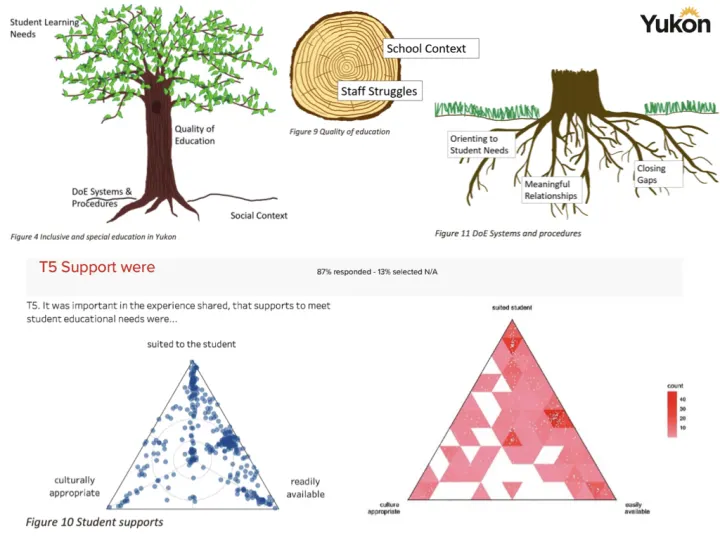
A Spryng report from Yukon Education's work on inclusive education, so that voices across the educational community can be heard.

Want to apply this in your setting?

Choose a relevant example, discuss your question, or use Orientation to define the study’s boundaries.